Labels

Monday, October 10, 2011

Chengdu: Countryside villages

While drinking tea in Renmin Gongyuan, I met a tour guide who offered me a private day trip in the villages of Chengdu's countryside. He promised the tour would show me an authentic view of chinese life that I would not see at the tourist attractions in the city. I decided to take him up on the offer and booked a tour for 8am the next morning.

THE FIRST VILLAGE

It was a 45 minute drive to the first village on the outskirts of Chengdu. Mr. Lee, our tour guide, said the countryside was only a ten minute drive when he started giving tours. We then had a discussion about the growth of Chengdu. I was shocked by what Mr. Lee had to say, which I will paraphrase for you: "I do not like the growth of Chengdu. There is nothing positive about the modernization of the city, it has all been bad. The chinese culture has been systematically destroyed and replaced by western culture. Chinese kids do not understand what it means to be chinese. I like the countryside better. Chinese traditions remain in the countryside. The children of the countryside go to the city and do not return, so only the elderly, poor, and infants remain. The women in this country have gone crazy. You must understand because the women in your country are crazy too. Our women no longer keep the tradition of foot-binding to keep them calm."

Here are pictures from the first village. Everyone we saw seemed to be a small business owner.

Streetside haircut

These vegetables still have the roots because they will be bought by small farmers who will replant them

Street food. The sweet rice cakes were good, but the fried tofu had too much 'ma'.

Teeth on the table of a streetside dentist

Traditional Chinese Medicine (TCM). This women is being treated for a headache with suction tubes

Medicinal Baiju (chinese liquor). Yes the bottle on the left is fermenting with a snake inside

TCM cure for impetus. In TCM you eat the body part you wish to cure.

This man is being treated for arthritis

This is where cotton comforters are made.

This pile of garbage has been carefully sorted and will be sold as raw materials to factories

This man is rubbing baiju on this women's back to cure her arthritis

THE MARKET

What truly amazed me about this market was that despite the massive quantity of raw meat there were no flies to be seen. In the cafeteria at Siyuan there are several flies buzzing around every table.

Catfish

Chicken

Davis "Why is that chicken black?" Mr. Lee "Why is there black people?" Davis "Fair enough"

Pork

Bamboo and Eggplant

Lotus

Pig Head, a chinese favorite

Pig snout and tail

Pig ear, chicken feet, and other popular animal parts

THE CATCH

While we were driving to the next village we saw people wading in a man-made lake. We made an unplanned stop which turned out to be a highlight of the trip. This lake was a fish farm for the chinese favorite--catfish.

The trap is set

They caught thousands of catfish in this net

Doesnt get any fresher than this


THE BLACKSMITH AND THE HAT MISTRESSES

Welcome to my workshop

I make butcher knives

*grinding*

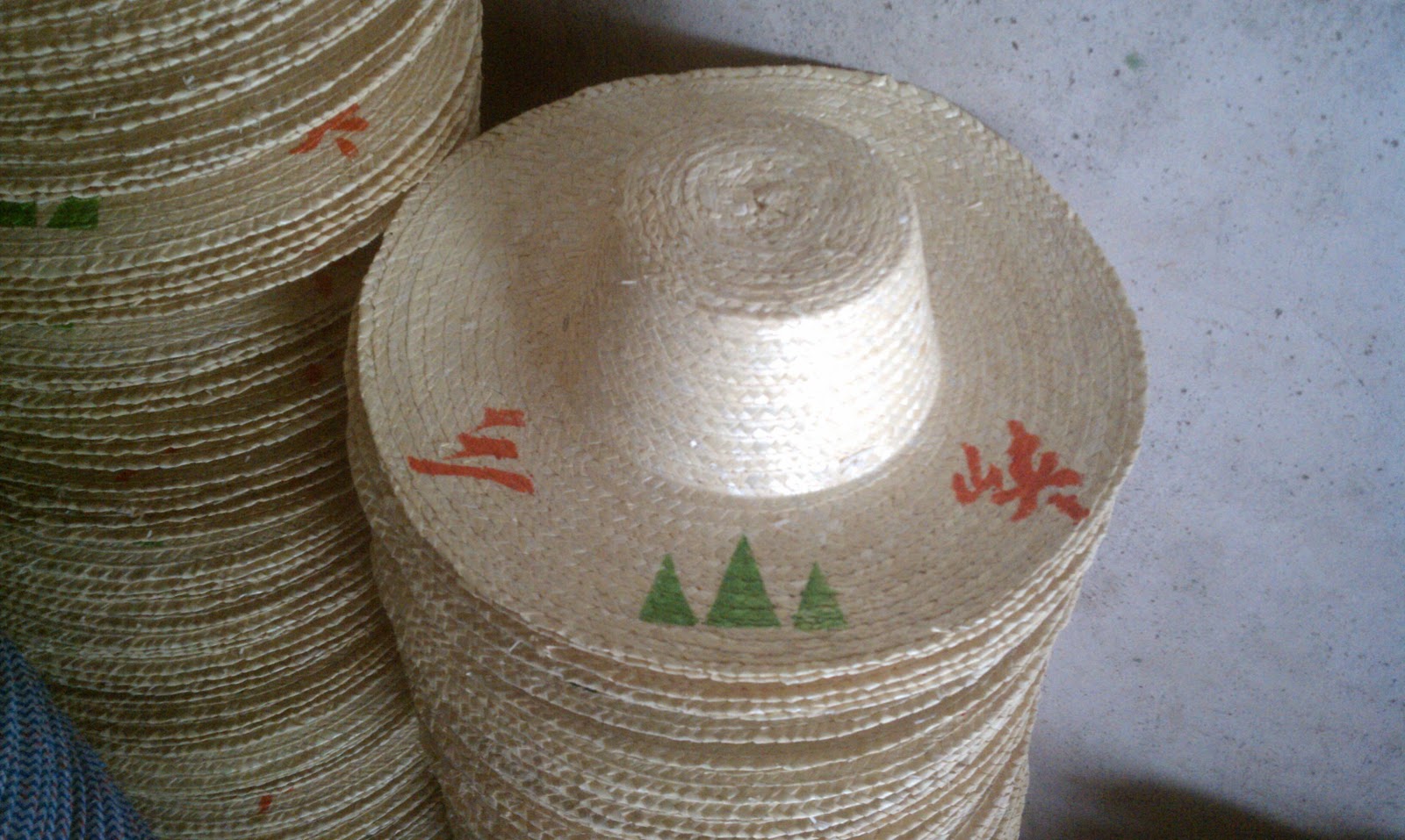
The straw hat assembly line

This straw is hand woven by country women

The hat-press machine

The finished product complete with company logo. Just Y 15

Before heading to the next destination, we had a short rest in this quiet 400 year old village 

No rest is complete without a spot of green tea

THE POTTER AND THE TOFU MISTRESS

Freshly spun pots

Glazed pots

Pots in various stages of completion

The massive pots in back are over 200kg and will be used for distilling baiju

This potter looks very young, but he is 55 years old. He said he is a lonely bachelor because no chinese woman wants to marry a potter.

The kiln

Liquid tofu

Semi-hardened tofu. Way too gelatinous for my tastes, but this women had half a dozen buyers while we  were at her shop


The waste product--pig feed.

Sunday, October 9, 2011

Chengdu: One spicy city

Chengdu cuisine is famous for being the spiciest in China, and also among the most delicious. Most any chinese restaurant in America will have items on their menu with 'sichuan' in the name. Often there will be some sort of warning on the menu as to the spicy nature of these dishes. These foods originate from Sichuan Province, of which Chengdu is the political, economic, and culinary capital.

My first encounter with Chengdu cuisine was on its famed Jin Li alley. The streets of Jin Li were overwhelmingly crowded--the densest crowd of people I have ever seen, ever. On my first venture into Jin Li I fought my way through the crowds to sample the famous street food. When I returned to the street a second time to find it even more crowded, I decided to look for food elsewhere.

Entrance to Jin Li alley
Deeper into Jin Li, the crowd thickens


The street food on Jin Li was excellent. I wish I remembered to take more pictures. Besides the quail pictured below, I sampled spiced fish, squid, pork, all on skewers. The dumplings were amazing. The pineapple rice served in a pineapple shell was incredible. Overall great food experience. The food on skewers was the spiciest, but I could manage it as long as I took my time as opposed to devouring it.

Spicy quail on a stick
 I met my match when I had the noodles in spicy sauce. I could tell at the first bite that it was very spicy, but the noodles were delicious so I kept at it. Unfortunately it was one of those slow heats that continued to build long after I had thrown my half eaten noodles in the trash. I have never had anything so spicy, and my reaction to it was not typical. I usually tear up when I eat something spicy. This dish gave me light-headedness and a loss of balance. Tingling and numbness spread from my mouth across my body and my mind was reduced to one though: ice cream. I waded through the crowd for what seemed like hours in a desperate search for an ice cream stand. When I finally found one the heat had passed. I never got that ice cream.

Wendy? I never knew she was Itaeian.

HOT POT

The most famous dish in Chengdu is hot pot. Essentially it is a pot of liquids and spices set atop a burner to keep at a low boil. At a hot pot restaurant, you order raw meats and vegetables to drop in the pot until cooked and saturated with spice. I had my Chengdu hot pot experience in a really cool neighborhood that had dozens of hot pot restaurants to choose from. It was also my 23rd birthday dinner, so we went a little crazy with the menu.


Neighborhood gate with Chengdu in the background

Close-up of the gate

Looking down at the neighborhood street from a second story bridge

Hot pot, midway through the meal. That meat is raw.

My birthday cake. I am year of the dragon, so I get a frosting dragon on the cake
On note about hot pot. It is very spicy, but not overwhelmingly so. The chinese word for spicy is 'la', so many foreigners will order their hot pot 'bu la' - no spice. For me it is the use of sichuan peppers that can be overwhelming. These peppers are not spicy, but deliver a numbness that can overpower your taste buds and make every bite taste like sichuan pepper. The chinese word for the numbness delivered by these peppers is 'ma'. The ma and la are traditional complements in hot pot and Sichuan cuisine. I enjoy the spice, but I order my food 'bu ma'.

Saturday, October 8, 2011

Chengdu: Pandas!

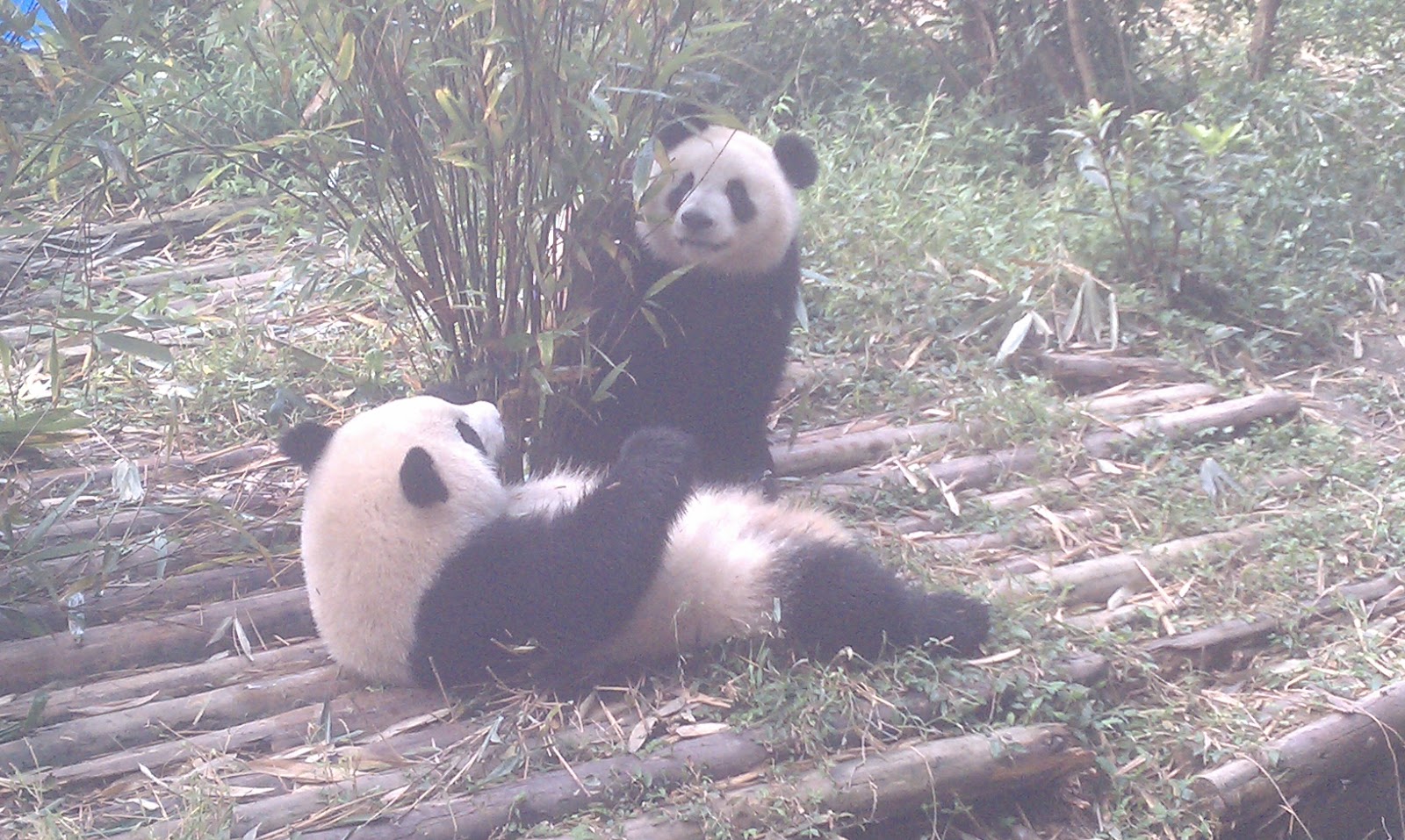
The highlight of my trip to Chengdu was seeing pandas at the Giant Panda Breeding Research Base. There are as few as 2000 pandas living in the wild. Most live in the mountains of Sichuan Province (of which Chengdu is the capital). The Giant Panda Breeding Research Base was established to increase the panda population, and now has the largest population of pandas in captivity.

PANDAS


Pandas at play

BABY PANDAS


RED PANDAS

Red pandas dont resemble giant pandas. They are more closely related to the American raccoon than the panda. Like raccoons, red pandas are in the bear family.


I think this Red Panda is broken...


Friday, October 7, 2011

Chengdu: Tianfu Square and Renmin Park

Chinese National Day is a similar holiday to Independence Day in America, except it lasts for a week. During this time, most Chinese visit family and friends. I took this time to travel to Chengdu, the capital of Sichuan Province. The city is famous for having the spiciest cuisine in China and the largest population of panda's in the world. Like Xi'an, Chengdu traces its roots back to the silk road and remains an important city in western China. However, the city is larger and feels more modern than Xi'an.

After arriving in Chengdu I headed to Tianfu Square at the very center of the city. It was crowded with people celebrating the holiday, but not nearly as crowded as some other places I visited.

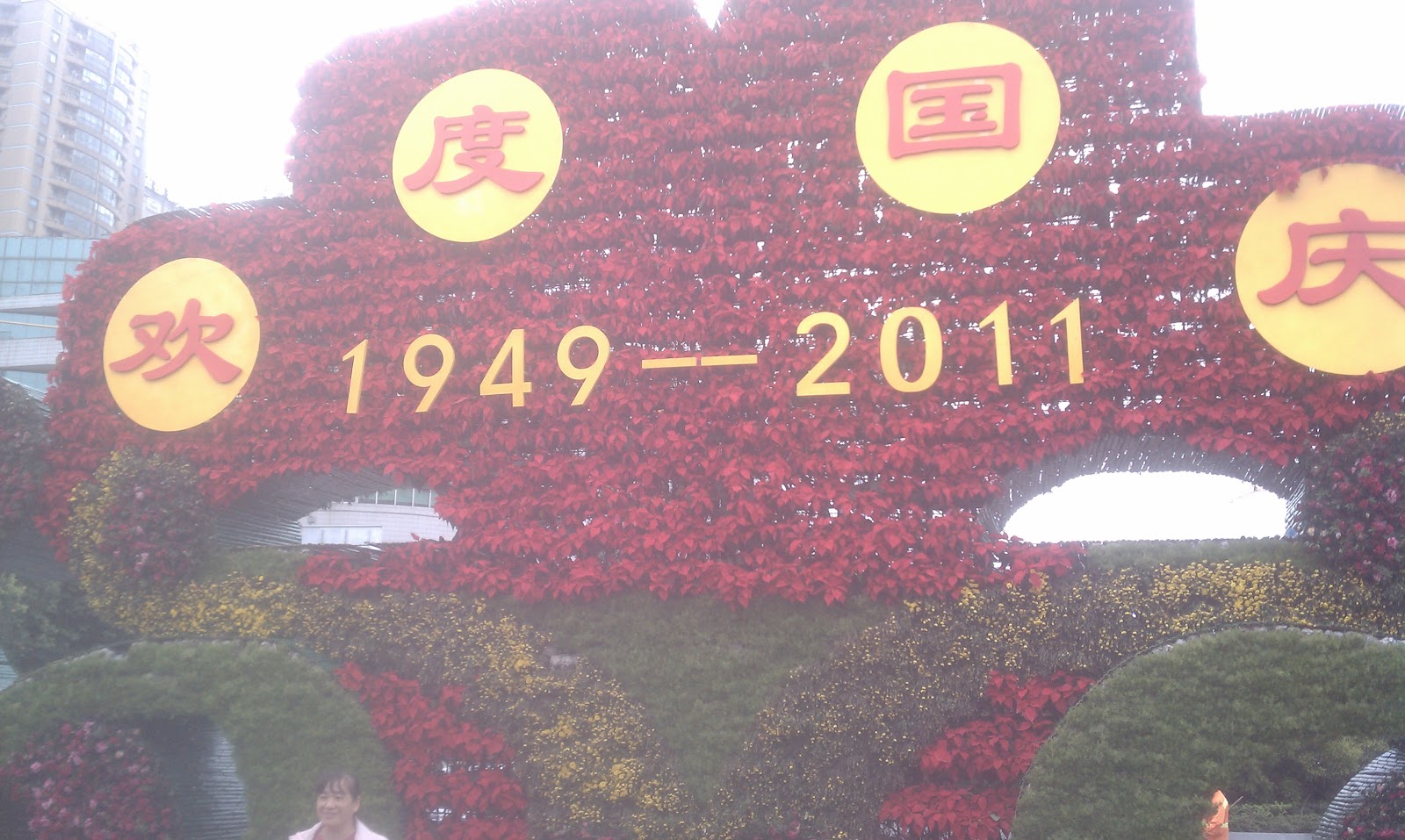
Floral arrangement commemorating National Day

Happy Birthday P R China

Mao stands between Tianfu Square and the Sichuan Science Museum. Ironic?

Canada?

Tianfu Square

A block from Tianfu Square is Renmin Gongyuan (People's Park). The people of Chengdu are known in China for being easygoing, and Renmin Gongyuan is where they go to relax. Popular park activities are tea-drinking, ear-cleaning, paddle-boating, kite-flying, and taichi.

Renmin Park is well defended by statues

The Monument to the Martyrs of the Railway Protection Movement of 1911. It memorializes an uprising of the people against corrupt officers who pocketed cash intended for railway construction.

I'll have an oolong tea please

Chrysanthemum tea