Labels

Sunday, October 9, 2011

Chengdu: One spicy city

Chengdu cuisine is famous for being the spiciest in China, and also among the most delicious. Most any chinese restaurant in America will have items on their menu with 'sichuan' in the name. Often there will be some sort of warning on the menu as to the spicy nature of these dishes. These foods originate from Sichuan Province, of which Chengdu is the political, economic, and culinary capital.

My first encounter with Chengdu cuisine was on its famed Jin Li alley. The streets of Jin Li were overwhelmingly crowded--the densest crowd of people I have ever seen, ever. On my first venture into Jin Li I fought my way through the crowds to sample the famous street food. When I returned to the street a second time to find it even more crowded, I decided to look for food elsewhere.

Entrance to Jin Li alley
Deeper into Jin Li, the crowd thickens


The street food on Jin Li was excellent. I wish I remembered to take more pictures. Besides the quail pictured below, I sampled spiced fish, squid, pork, all on skewers. The dumplings were amazing. The pineapple rice served in a pineapple shell was incredible. Overall great food experience. The food on skewers was the spiciest, but I could manage it as long as I took my time as opposed to devouring it.

Spicy quail on a stick
 I met my match when I had the noodles in spicy sauce. I could tell at the first bite that it was very spicy, but the noodles were delicious so I kept at it. Unfortunately it was one of those slow heats that continued to build long after I had thrown my half eaten noodles in the trash. I have never had anything so spicy, and my reaction to it was not typical. I usually tear up when I eat something spicy. This dish gave me light-headedness and a loss of balance. Tingling and numbness spread from my mouth across my body and my mind was reduced to one though: ice cream. I waded through the crowd for what seemed like hours in a desperate search for an ice cream stand. When I finally found one the heat had passed. I never got that ice cream.

Wendy? I never knew she was Itaeian.

HOT POT

The most famous dish in Chengdu is hot pot. Essentially it is a pot of liquids and spices set atop a burner to keep at a low boil. At a hot pot restaurant, you order raw meats and vegetables to drop in the pot until cooked and saturated with spice. I had my Chengdu hot pot experience in a really cool neighborhood that had dozens of hot pot restaurants to choose from. It was also my 23rd birthday dinner, so we went a little crazy with the menu.


Neighborhood gate with Chengdu in the background

Close-up of the gate

Looking down at the neighborhood street from a second story bridge

Hot pot, midway through the meal. That meat is raw.

My birthday cake. I am year of the dragon, so I get a frosting dragon on the cake
On note about hot pot. It is very spicy, but not overwhelmingly so. The chinese word for spicy is 'la', so many foreigners will order their hot pot 'bu la' - no spice. For me it is the use of sichuan peppers that can be overwhelming. These peppers are not spicy, but deliver a numbness that can overpower your taste buds and make every bite taste like sichuan pepper. The chinese word for the numbness delivered by these peppers is 'ma'. The ma and la are traditional complements in hot pot and Sichuan cuisine. I enjoy the spice, but I order my food 'bu ma'.

Saturday, October 8, 2011

Chengdu: Pandas!

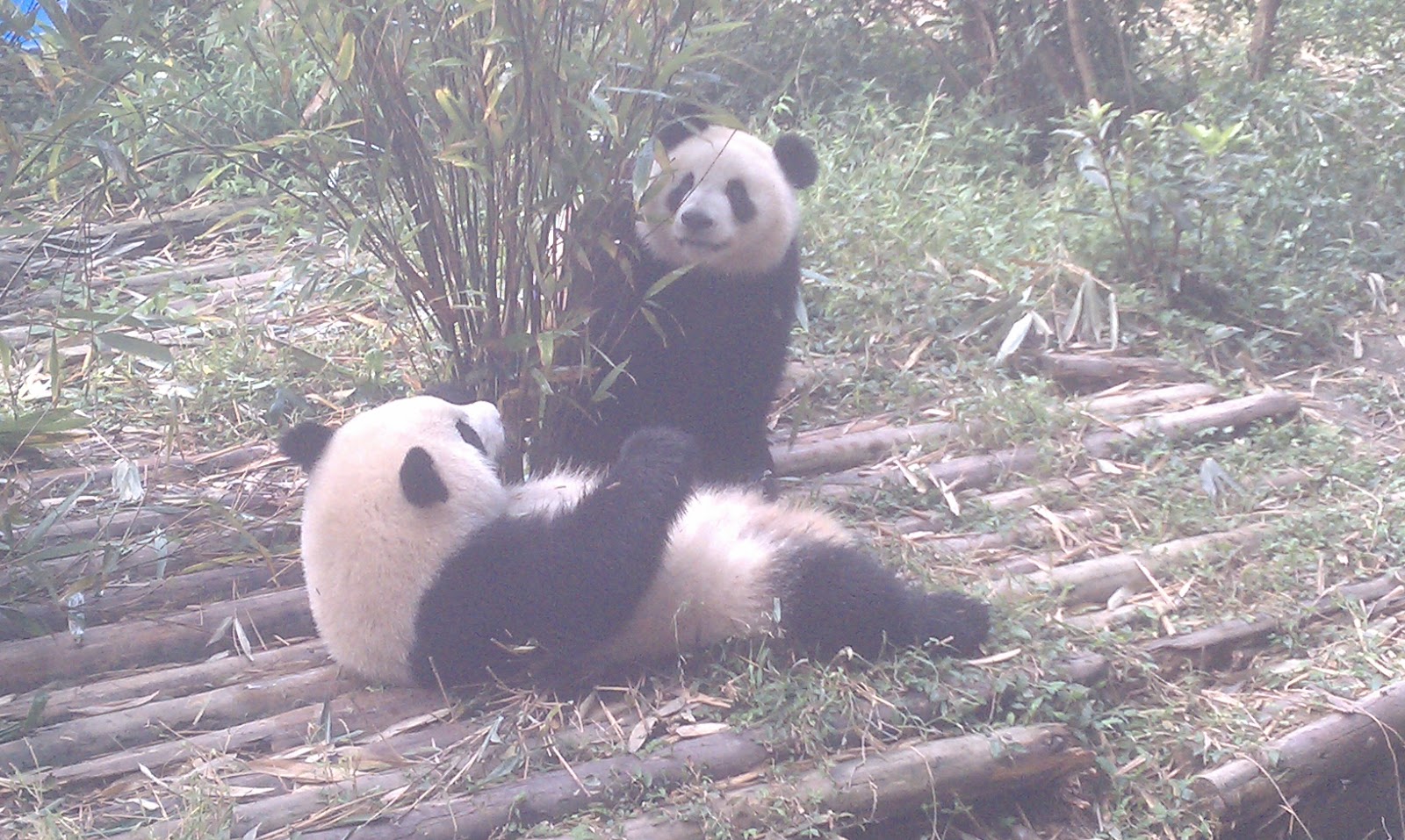
The highlight of my trip to Chengdu was seeing pandas at the Giant Panda Breeding Research Base. There are as few as 2000 pandas living in the wild. Most live in the mountains of Sichuan Province (of which Chengdu is the capital). The Giant Panda Breeding Research Base was established to increase the panda population, and now has the largest population of pandas in captivity.

PANDAS


Pandas at play

BABY PANDAS


RED PANDAS

Red pandas dont resemble giant pandas. They are more closely related to the American raccoon than the panda. Like raccoons, red pandas are in the bear family.


I think this Red Panda is broken...


Friday, October 7, 2011

Chengdu: Tianfu Square and Renmin Park

Chinese National Day is a similar holiday to Independence Day in America, except it lasts for a week. During this time, most Chinese visit family and friends. I took this time to travel to Chengdu, the capital of Sichuan Province. The city is famous for having the spiciest cuisine in China and the largest population of panda's in the world. Like Xi'an, Chengdu traces its roots back to the silk road and remains an important city in western China. However, the city is larger and feels more modern than Xi'an.

After arriving in Chengdu I headed to Tianfu Square at the very center of the city. It was crowded with people celebrating the holiday, but not nearly as crowded as some other places I visited.

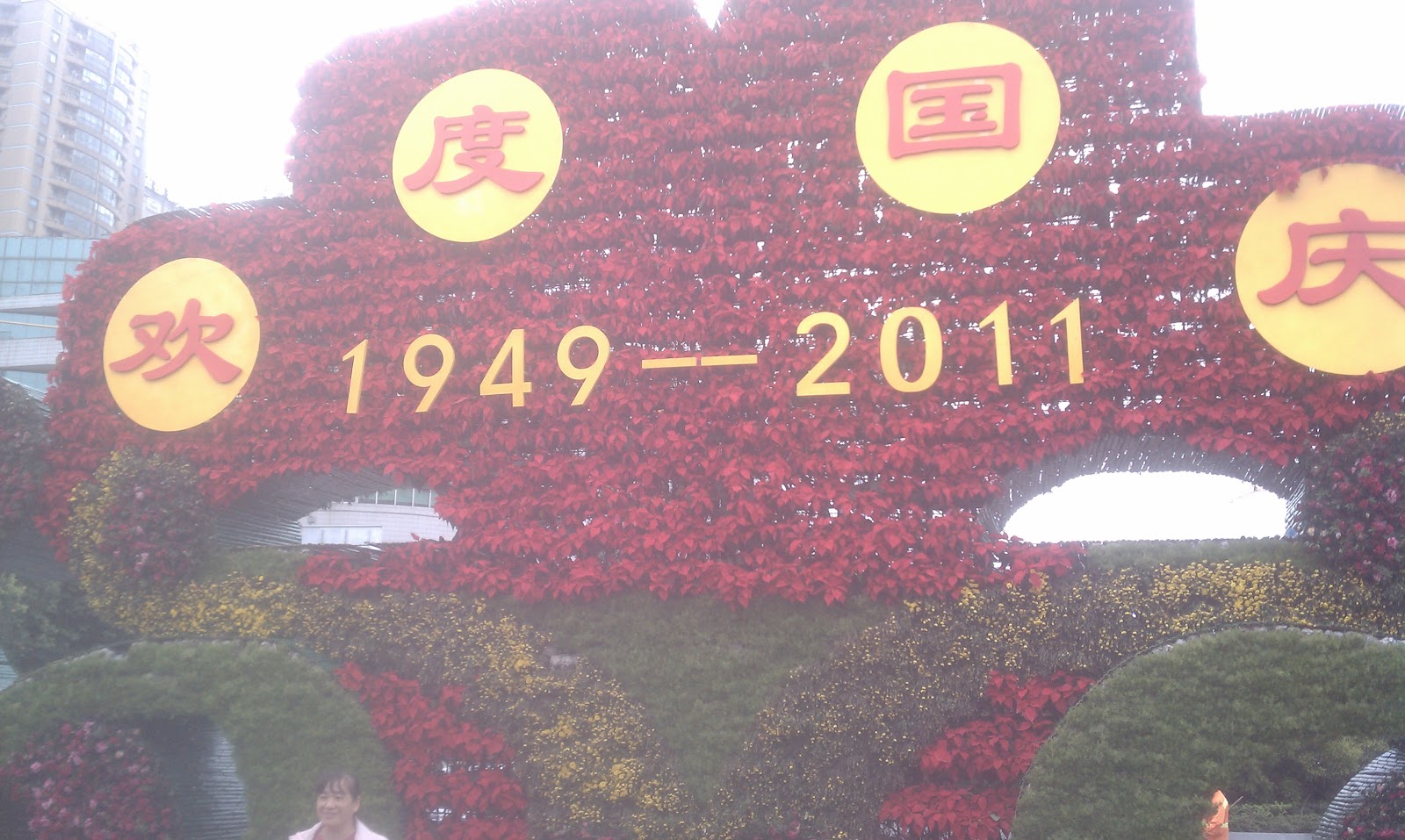
Floral arrangement commemorating National Day

Happy Birthday P R China

Mao stands between Tianfu Square and the Sichuan Science Museum. Ironic?

Canada?

Tianfu Square

A block from Tianfu Square is Renmin Gongyuan (People's Park). The people of Chengdu are known in China for being easygoing, and Renmin Gongyuan is where they go to relax. Popular park activities are tea-drinking, ear-cleaning, paddle-boating, kite-flying, and taichi.

Renmin Park is well defended by statues

The Monument to the Martyrs of the Railway Protection Movement of 1911. It memorializes an uprising of the people against corrupt officers who pocketed cash intended for railway construction.

I'll have an oolong tea please

Chrysanthemum tea

Thursday, September 29, 2011

My students are hard workers

If a picture is worth a thousand words, than a video has got to be a dictionary's worth. This is my first attempt at uploading a video to my blog. I am filming from my second floor classroom in building K3. In the video I pan  across buildings K1 then K2 and the court yard of the international school, then into the classroom. You then see my students hard at work. Let me know what you think of the video by writing a comment below. I will try to post more videos in the future.


Tuesday, September 27, 2011

Big Wild Goose Pagoda

This weekend I visited the Big Wild Goose Pagoda. It was Xi'an's most famous cultural attraction until the terra cotta warriors were unearthed. The pagoda still remains a symbol of the city and a must see location for visitors to Xi'an. The pagoda was built over 1300 years ago when the Tang dynasty ruled China from Xi'an. The purpose of the pagoda was to store buddhist sutras and figurines brought from India.

Big Wild Goose Pagoda from the north
Fountain pool on north side of pagoda

A wall depicting scenes from the Silk Road. Xi'an was the terminus of the Silk Road in China.
A fake tree on the grounds of the pagoda. It appears to have an electrical purpose.
Path around the pagoda

Souvenir stalls. Hundreds of identical stalls selling the same merchandise.

Peaceful Pavilion.
Park on the south side of the pagoda

Another fake tree

View of the pagoda from the south square

Statue on south square in front of pagoda

South square

South gate of pagoda

A man writing on the sidewalk with water symbolizing the transience of life

'Pancakes here look like manhole covers. There are easy to carry when the locals go on a journey'

A happy chinese family.

China uses only the finest grass on the grounds of its cultural attactions
A final look at the pagoda from the south park
The Pizza Hut Pagoda. It was built in 2003 to store recipes and silverware brought from America.